
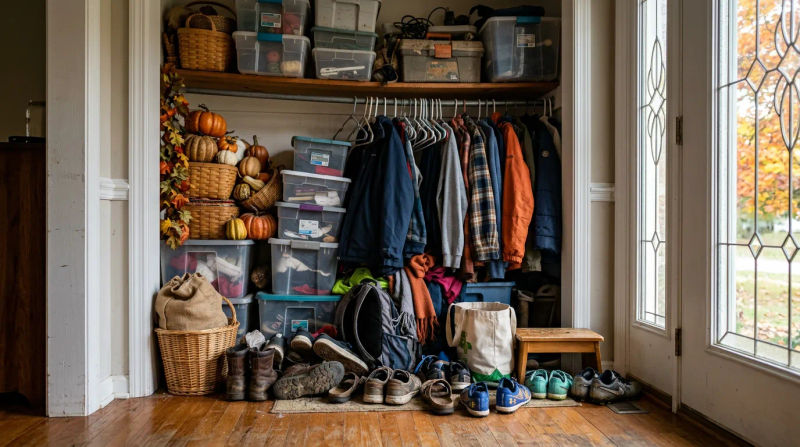
You step into your entryway after a long day, navigating a maze of school bags, stray shoes, and a growing pile of mail on the console table. It’s October in Crestwood, and the first signs of heavy leaf fall remind you that the rake is buried somewhere in the garage - probably behind last season’s sports equipment and the summer pool floats that never got put away. The thought of adding holiday decorations to this chaos in just a few weeks feels less festive and more overwhelming. If this scene feels familiar, you’re not alone. Many households experience a slow creep of disorganization that suddenly feels unmanageable, especially as seasons change.
As a specialist who has overseen countless home projects, I’ve learned that clutter is rarely about just “too much stuff.” It’s often a symptom of systems that are no longer working for your family’s lifestyle. Recognizing the signs early is the key to preventing pre-holiday stress and reclaiming your home as a place of comfort, not chaos.
Common Signs and Symptoms
How do you know if you’ve crossed the line from a little untidy to needing a systematic overhaul? Certain patterns consistently appear when a home’s organizational structure is failing. Here are seven common signs that it might be time to seek home organization help.
- Your “Drop Zones” Have Become Disaster Zones: Every home has them - the kitchen counter, the stairs, the mudroom bench. These are the places where things land when you walk in the door. But when these clutter hot spots, mudroom and entryway areas especially, are permanently buried, it’s a red flag. In a busy community like Crestwood, where schedules are packed with commutes and kids' activities, these zones can overflow quickly, turning a convenient drop-off point into a source of daily frustration.
- You Routinely Buy Duplicates: You need packing tape, and you’re sure you have some, but after 10 minutes of searching, you give up and buy another roll at the store. A week later, you find three rolls in a drawer you forgot about. Buying duplicates isn't a memory problem; it's an inventory and system problem. When you don't have a designated “home” for items, you can't find them when you need them.
- Flat Surfaces Are Never Truly Clear: Is your dining room table a permanent home for laptops, school projects, and random piles? Are your kitchen counters used more for storage than for food prep? In many of the spacious Crestwood homes built in the 1990s and 2000s, the open-plan layouts and high ceilings can actually make visual clutter feel more pronounced. Without defined zones, clutter spreads easily across these large, open surfaces.
- You Feel Anxious About Unexpected Guests: If the sound of the doorbell sends you into a panic as you frantically shove things into closets, it’s a sign that your home’s baseline state is not one you’re comfortable with. Your home should be a sanctuary, not a source of social anxiety or embarrassment.
- Your “Cleaning” Is Just Clutter Shuffling: You spend an entire Saturday “organizing,” but by the end of the day, all you’ve really done is move piles from the living room to the guest room or consolidated bags into a bigger box in the garage. This is a common cycle that creates the illusion of progress without solving the root problem.
- Seasonal Transitions Are a Major Source of Stress: The act of swapping out seasonal clothing, packing away summer gear, or preparing for holiday decorations feels like a monumental, multi-week task. A well-organized home has systems in place that make these transitions smooth and efficient, not something you dread for weeks.
- Rooms Can’t Be Used for Their Intended Purpose: The guest bedroom has become a long-term storage unit. The garage is so full of boxes there’s no room for a car. The home office is unusable because the desk is buried. When clutter takes over a room’s function, it’s a clear indicator that the balance has tipped and a reset is needed.
What Causes This Problem
Understanding why clutter accumulates is the first step toward a lasting solution. It’s rarely due to laziness; more often, it’s a combination of practical and logistical factors.
- Lack of Sustainable Systems: The most common cause we see is the absence of simple, intuitive systems. Where does mail go? How are kids’ school papers processed? Where do batteries and lightbulbs live? Without a designated home for every category of item, things are destined to become clutter.
- Life Changes and Transitions: A new baby, a child starting school, a change in career, or combining households can render old organizational methods obsolete. What worked for a family with toddlers may not work for a family with teenagers and all their associated gear. Disorganization often signals that your home’s systems haven’t adapted to your current life stage.
- The Double-Edged Sword of Space: Homes in the Crestwood area, particularly those from the late 20th and early 21st centuries, often boast generous square footage. While this space is a luxury, it can also enable clutter to grow unchecked. Large, open rooms and basements can become dumping grounds simply because the space is available, delaying the need to make crucial decisions about what to keep.
- Decision Fatigue and Lack of Time: After a long day of work and managing family schedules, the mental energy required to decide what to do with every item that comes into the house is depleted. It becomes easier to just set it down “for now,” and “for now” quickly becomes permanent.
When to Call a Professional
Deciding between a professional organizer vs DIY declutter approach depends on the scale of the problem and your personal resources. A DIY approach can be effective if your issue is confined to a small, manageable area like a single closet or a pantry, and you have a clear vision and the time to execute it.
However, it’s time to consider calling for home organization help in Crestwood, KY when:
- You are completely overwhelmed. If you don’t even know where to begin, the objective guidance of a professional can provide a clear, actionable starting point.
- You’ve tried and failed before. If your past attempts to get organized have only provided temporary relief, it’s likely you need help creating systems that address the root cause, not just the symptoms.
- You lack the time or physical ability. A whole-home organization project is physically and mentally demanding. Trained crews operate with an organized workflow and standardized processes to tackle the job efficiently and safely, saving you weeks or even months of effort.
- You need an objective third party. It can be hard to part with items that have sentimental value or that you think you might need someday. A professional provides a neutral perspective to help you make clear, logical decisions without emotional attachment.
Experienced professionals do more than just tidy up. We work with you to understand your lifestyle and establish functional, maintainable systems that prevent the clutter from returning.
Conclusion
Feeling overwhelmed by clutter is a common problem, but it doesn’t have to be a permanent state. By recognizing the signs - from overflowing drop zones to rooms that have lost their function - you can take the first step toward creating a more peaceful and efficient living environment. Addressing these issues in the fall, before the busy holiday season begins, can transform your experience of the months ahead, allowing you to focus on family and festivities instead of stressing about stuff.
If you recognize these patterns in your own home, it might be time to seek an expert opinion. Contact a local professional for an assessment to discuss your needs and reclaim your space.